The Districts of Bavaria
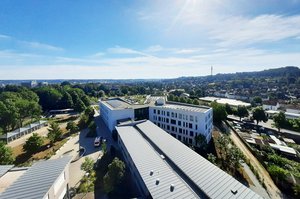
The Free State of Bavaria is subdivided into seven districts: Middle Franconia, Lower Bavaria, Upper Bavaria, Upper Franconia, Upper Palatinate, Lower Franconia, and Swabia. Alongside cities/municipalities and rural districts, these districts constitute the third level of local government. They perform autonomous functions in the social, cultural, health, and economic spheres.
The Responsibilities of the District
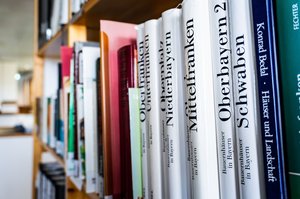
The District establishes and supports public institutions for the social, economic and cultural well-being of all citizens living in Middle Franconia.
Social Affairs
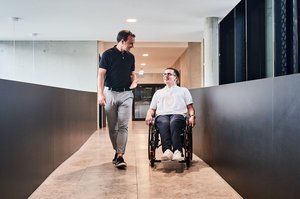
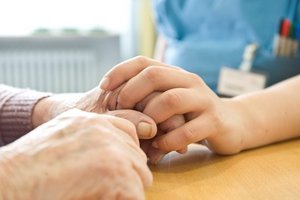
Social assistance plays a significant role within the District. In Middle Franconia, more than 35,000 people - who are dependent on support and unable to obtain it from third parties - receive corresponding benefits from the District.
The District is responsible for the integration of individuals with physical, intellectual, and/or psychological disabilities, as well as for providing care assistance - both in home environments (such as day care) and in residential care and nursing homes. If care costs cannot be financed through one's own means or covered with the assistance of health insurance providers, the District steps in to cover the remaining expenses. Prior to approval, all such applications undergo a thorough review by the District.
The objective of these assistance measures is to enable individuals to lead independent lives and to participate fully and equally in society.
Health
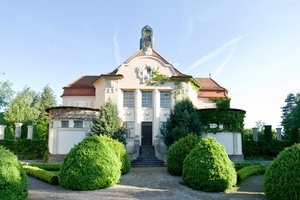
The District places great emphasis on the care of individuals with mental illnesses who require medical and/or therapeutic assistance. The aim of this support is to foster or preserve a sense of a life worth living for those affected.
The District Clinics of Middle Franconia thus constitute one of the largest hospital organizations in the region, offering an extensive care network that provides professional support. These areas of specialization include psychiatry, psychotherapy services, psychosomatics, neurology, and geriatric rehabilitation.
Education
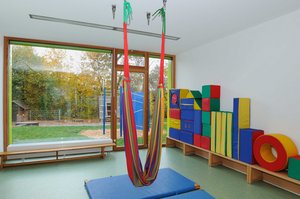
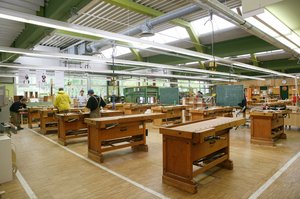
The District of Middle Franconia also plays a significant role in the field of education. It maintains schools and educational institutions catering to children, adolescents, and young adults. More than 4.500 young people and over 17.000 course participants benefit from these offerings. A diverse range of programs is available to them, spanning from the preschool years through to vocational training. Furthermore, individuals with disabilities can successfully complete their schooling up to the level of a secondary school diploma at these institutions, thereby fostering their social integration. The spectrum of training disciplines ranges from commercial professions to skilled trades. The objective is to open up professional prospects for young people, preserve traditional occupational profiles, and promote forward-looking career paths.
The District of Middle Franconia also places great importance on the promotion of youth activities and sports. Examples of youth support initiatives include the “Bezirksjugendring” and the Burg Hoheneck Youth Education Center. In the realm of sports promotion, key organizations include the Bavarian State Sports Association (Middle Franconia District), the Middle Franconia Shooting Federation, and the Association for Sports for the Disabled and Injured.
Culture
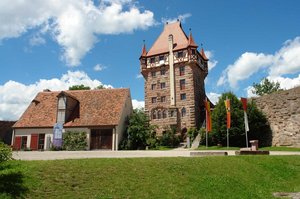
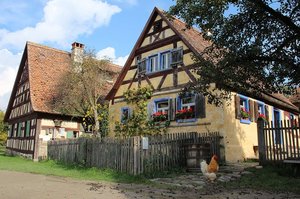
The preservation of culture and local heritage constitutes another central area of responsibility for the District. The objective is to preserve and further develop the cultural diversity of Middle Franconia. Through targeted funding of events, cultural institutions, and advisory centers, the aim is to ensure an equitable standard of cultural life in both urban and rural areas. This is also achieved through the District’s own institutions, such as the Middle Franconia Open-Air Museum in Bad Windsheim and the Research Center for Franconian Folk Music.
Furthermore, cultural practitioners from Middle Franconia are honored annually by the District with the Wolfram-von-Eschenbach-Prize, every two years with the Otto-Grau-Cultural-Prize, and since 2023 with up to three Pop Music Awards.
Nature and Environment
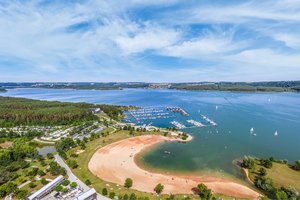
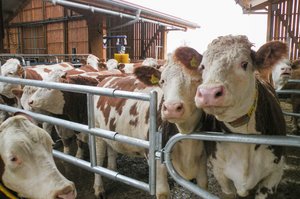
The District of Middle Franconia is also actively engaged in the fields of nature and the environment. The District is a member of the special-purpose associations for the Altmühlsee, Brombachsee, and Rothsee; these organizations successfully combine recreation and environmental protection. A bird sanctuary island in the Altmühlsee, for instance, provides a suitable refuge for endangered bird species and helps ensure their preservation. Furthermore, the management and landscaping of the region's waterways serve to harmonize the interests of fisheries and ecology.
The Middle Franconia Landscape Conservation Association, among other organizations, advocates for the preservation of the region's diverse cultural landscapes. The District also serves as a model in the energy sector through its utilization of renewable energy sources. Since 2010, the energy supply for the District's facilities has been powered almost entirely by green electricity. Additionally, the Middle Franconia District Assembly has developed a comprehensive energy strategy and established an energy agency in Triesdorf.
Europe
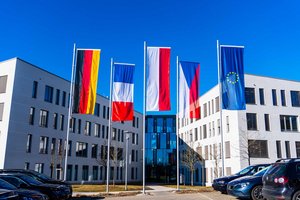
For over four decades, the District of Middle Franconia has contributed to international rapprochement and peace through its partnership initiatives. A key benefit of this work is that European relations are strengthened and sustained through these regional partnerships, thereby creating and utilizing avenues for international understanding.
Since the 1970s, the District has cultivated cooperative and friendly relations with the Nouvelle-Aquitaine region (formerly Limousin) and the three French departments of Haute-Vienne, Creuse, and Corrèze; since the 1990s, with the Pomeranian Voivodeship (Pomorskie) in Poland; and since 2023, with the South Moravian Region in the Czech Republic. Under the umbrella of these regional partnerships, 44 municipalities in Middle Franconia have signed official friendship agreements with communities in the three partner regions.
The District Assembly
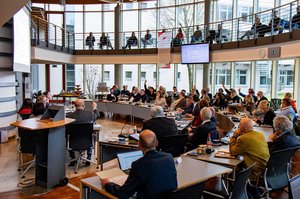
The District Assembly is the body directly elected by the people to represent the citizens of Middle Franconia. Its members are elected every five years, concurrently with the state parliamentary elections. To prepare for and discharge its duties, the District establishes various committees.
The President of the District Assembly - who is elected by the Assembly’s members - presides over the Assembly and its committees, unless he delegates this function to another member of the Assembly. For the 2023 – 2028 term, Peter Daniel Forster was elected to the President of the District Assembly. He implements the Assembly’s resolutions and represents the District in its external relations.
District Administration
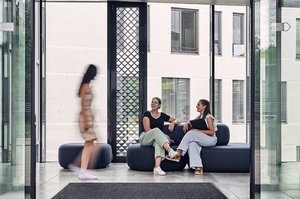
The District Administration serves as the executive body of the District of Middle Franconia. The Director of the Administration is Manuela Eppe-Sturm. She serves as the chief administrative officer and acts as the deputy to the President of the District Assembly. Together with over 1 400 employees of the District of Middle Franconia and its affiliated institutions, she oversees the fulfillment of statutory duties and the implementation of resolutions passed by the District Assembly and its committees. Furthermore, the Administration provides guidance and support to the subordinate district organizations in the execution of their duties.